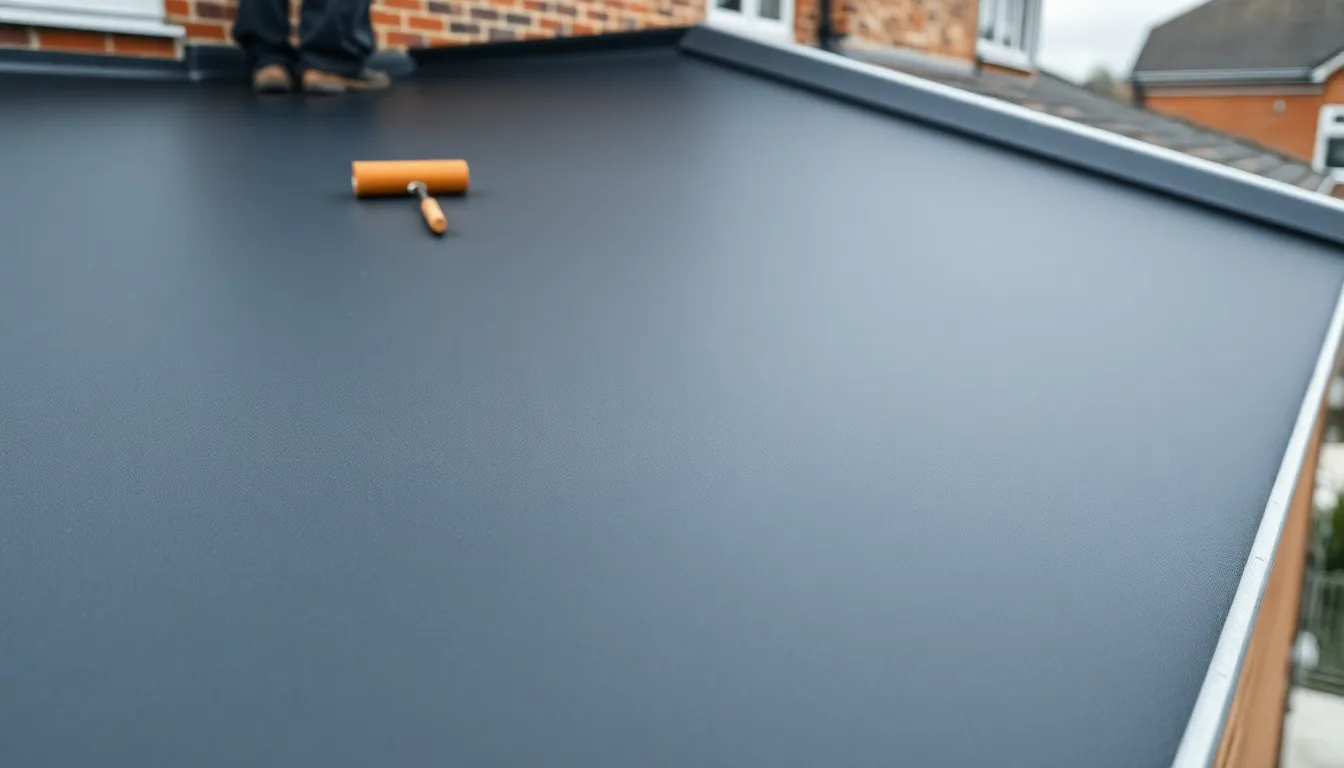
Flat Roofing
Flat Roof vs Pitched Roof: Which Is Right for Your Doncaster Home?
Published · Written by Don Valley Roofing
Single-storey extensions, garages and dormers get a flat roof almost by default across our Doncaster patch and Barnsley’s hillside streets. It’s simpler to build and cheaper up front than matching the pitch of the main house. Our flat roofing team fits and repairs these systems on both sides of the Don Valley. That doesn’t mean it’s always the right call, however, and it’s worth understanding the trade-off before you commit either way.
Why flat roofs are so common on extensions
A flat roof, in practice, usually has a shallow fall of a few degrees rather than being literally flat. Still, it avoids the structural complexity of tying a new pitched roof into an existing one.
It’s also quicker to build than a pitched equivalent. It uses less headroom internally too, which matters where a low fence or window limits how high the roof can rise. And it costs less than replicating tiles, battens and a timber frame at a matching pitch — for a single-storey side return or garage, that’s usually the sensible choice.
Where a pitched roof earns its extra cost
Pitched roofs shed water and debris naturally by gravity, rather than relying on a membrane and falls to drain correctly. As a result, a well-built pitched roof in tile or slate routinely outlasts a flat roof by decades rather than years.
If the extension is large, highly visible from the street, or forms a major part of the house — a two-storey rear extension, for example — a pitched roof can be worth the extra build cost. The same goes for a warm-roof conversion on something like a conservatory: the payoff is both longevity and how the property looks and sells later.
Modern flat roofing has closed the gap
The old reputation flat roofs have for leaking mostly traces back to traditional bitumen felt. Older single-layer felt typically lasts only 10–15 years and is prone to blistering and seam failure, although a modern three-layer torch-on system can reach 20–30 years.
Modern systems change that picture considerably. EPDM rubber is routinely rated for 30–50 years, while GRP fibreglass offers a seamless, walkable surface that typically performs for 20–30 years as standard when installed correctly, with higher-spec systems reaching 30–40 years or more. Our full breakdown of EPDM vs GRP vs felt compares all three side by side.
The real decision points
- How big and how visible is the roof? A garage or small side-return favours flat. A large, street-facing extension may justify pitched.
- What’s your budget for the build, not just the roof? Pitched costs more upfront in structure as well as covering.
- How long do you want it to last with minimal attention? A quality EPDM or GRP flat roof, properly maintained, competes well with a pitched roof over a realistic ownership period.
- Are there height or planning constraints? A low boundary or a neighbour’s window can rule out a full pitched conversion.
Our honest recommendation
For most single-storey extensions and garages in the Doncaster area, a well-installed EPDM or GRP flat roof is a perfectly sound, long-lasting choice. The “flat roofs always leak” reputation belongs to old felt, not to modern systems fitted properly.
Where the extension is large or highly visible, it’s worth pricing a pitched alternative before deciding. We’ll give you a straight opinion either way, based on the specific building rather than a one-size-fits-all answer.
Further reading
Choosing between flat and pitched is only half the decision. Who does the work matters just as much, however, and our guide on choosing a roofer in Doncaster lists the questions worth asking before you commit to either option. If you do go pitched, our comparison of slate versus concrete roof tiles in Yorkshire’s climate is a useful next read.
Related pages
Got a roofing job in mind?
Send us a few details and we'll give you an honest, no-obligation quote.
Get a Free Quote